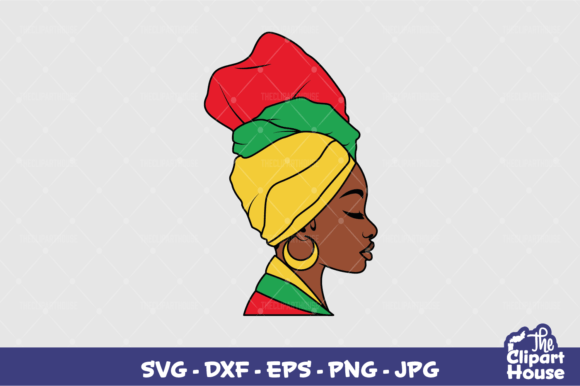
Juneteenth Headwrap Woman
A Design That Carries Meaning—Not Just Motif
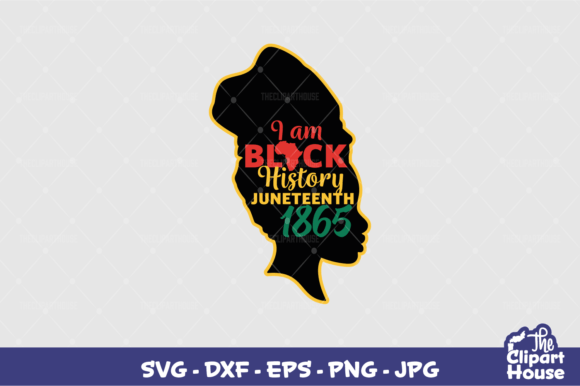
When I first opened Juneteenth Headwrap Woman, I didn’t just see a graphic—I saw intention. The silhouette is confident and grounded, the headwrap’s folds rendered with quiet precision, and the overall composition balances reverence with approachability. It doesn’t shout; it centers. As a designer who regularly selects embroidery files for client work—from boutique aprons to custom baby blankets—I immediately asked: *Will this translate cleanly in thread? Will it hold up on real fabric, under real stitching conditions, for real people holding real meaning in their hands?*
Where This Design Truly Shines
I tested Juneteenth Headwrap Woman as the focal point on a natural linen tote bag—stitched with 40-weight cotton thread on medium-weight tear-away stabilizer. The result? Crisp, dignified, and unmistakably handmade. The design’s moderate scale and clean negative space made it ideal for sweatshirt embroidery (left chest), embroidered patches (3.5" finished), and tea towel corners. It also worked beautifully on a soft cotton baby onesie—scaled down to 2.75"—because the headwrap’s curves and gentle contours avoided fussy detail that would blur at small sizes.
For Etsy sellers and craft business owners, this is a strong candidate for curated Juneteenth collections: think matching pillow covers + kitchen towels, or a limited-run set of embroidered caps and tote bags. Its visual warmth supports brand consistency across product types without needing heavy rebranding. And because it avoids dense fill-stitch areas or micro-detail, it stitches reliably on standard home embroidery machines—no redrawing or simplification needed.
Where Caution Is Warranted
Juneteenth Headwrap Woman isn’t built for every surface—or every expectation. On highly textured fabrics like bouclé or thick terry cloth, the subtlety of the headwrap’s drape can get lost. On stretchy knits (think lightweight jersey tees), I recommend testing with cut-away stabilizer and a light topping—otherwise, the satin stitch edges may pucker or distort. Dark fabrics demand careful thread color selection: a deep navy or charcoal works well, but avoid low-contrast combos like black-on-black unless you’re aiming for subtle tone-on-tone.
Curved surfaces—like the front panel of a structured cap—require hooping finesse. The design’s width fits comfortably in a 4x4 hoop, but if your machine has tight clearance, check how much of the headwrap’s side contour clears the arm. Also, while the design reads clearly at 3"–4", avoid shrinking it below 2" for apparel—it loses definition in the wrap’s inner folds and facial outline. No tiny lettering or fine linework here to trip up the stitch path, but that also means it relies on shape and proportion for impact—not ornamentation.
What This Means for Your Finished Product
Customers notice authenticity before aesthetics. When someone sees Juneteenth Headwrap Woman stitched on a handmade apron or gift-wrapped pillow cover, they feel the care behind the choice—not just “a Juneteenth design,” but one that honors presence, heritage, and quiet strength. That builds trust. It elevates a simple tote bag from craft fair staple to meaningful keepsake. For small shop owners, that distinction matters: it supports higher perceived value, smoother gifting context, and stronger buyer engagement—especially during holiday seasons or community-centered events.
That said, don’t assume automatic commercial readiness. While the product description confirms compatibility with Cricut, Silhouette, and other cutting machines—and mentions printable formats like heat transfer and iron-on—the licensing terms aren’t specified. If you plan to sell physical items featuring Juneteenth Headwrap Woman, verify usage rights. Same goes for digital embroidery file resale or bundling into design assets: confirm whether your intended use falls under personal, small business, or extended commercial license.
Practical Designer Notes You’ll Actually Use
- Always test first—run Juneteenth Headwrap Woman on scrap fabric matching your final project’s weight and weave. Linen behaves differently than cotton poplin; fleece reacts differently than rayon challis.
- Check stitch density visually before stitching. Look for any areas where fill stitches might crowd or cause puckering—especially along the headwrap’s lower edge. A balanced density ensures durability through washing.
- Review thread colors in context. Try it in both warm and cool neutrals (ecru, oat, slate) against light and dark backgrounds. A mockup isn’t enough—see how the thread catches light on real fabric.
- Confirm hoop size early. At standard scaling, this design fits a 4x4 hoop comfortably—but if you’re planning larger runs or layered applique, double-check your machine’s max dimensions.
- Inspect small details at actual stitch size. Zoom in on your embroidery software: are the headwrap’s folds legible? Does the silhouette’s neckline read cleanly? If not, a slight trace-and-tweak may be worth the time.
- Use proper stabilizer. Medium-weight tear-away works for stable wovens; switch to cut-away for knits or delicate fabrics. Skip the “stabilizer-light” approach—this design earns its clarity through clean backing.
- Test black-and-white mockups. Many buyers preview digitally before purchasing. If the design loses impact without color, consider how you’ll present it in listings or print catalogs.
Final Thought: A Thoughtful Addition to Your Design Toolkit
Juneteenth Headwrap Woman isn’t flashy—but it doesn’t need to be. It’s a well-proportioned, culturally resonant machine embroidery design that performs consistently across tote bags, baby items, patches, and holiday gifts. It suits craft business owners who value substance over speed, Etsy sellers building intentional collections, and designers selecting graphics that reflect depth—not just decoration. As a reviewer who’s stitched hundreds of designs for real clients and real deadlines, I keep Juneteenth Headwrap Woman in my go-to folder for projects where meaning, clarity, and craftsmanship must all land together. Just remember: test, stabilize, and honor the context. Then let the design speak—for itself, and for the people who’ll wear, hold, and cherish it.