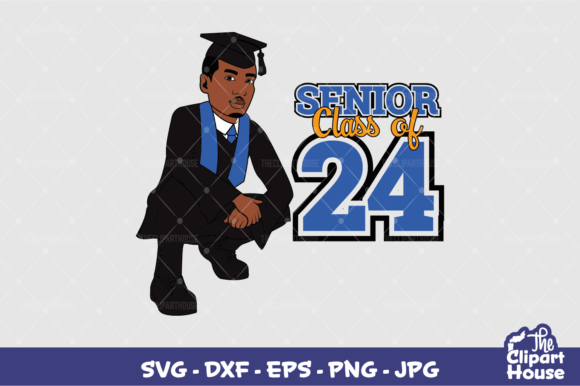
Senior Class of 24 Man
A Designer’s First Look: Clean, Confident, and Classically Crafted
When I opened Senior Class of 24 Man, my eye went straight to the balance—clean lettering, intentional spacing, and a subtle graphic weight that reads as both celebratory and grounded. It doesn’t shout; it stands. As an embroidery designer who’s stitched hundreds of graduation-themed pieces—from baby onesies to boutique aprons—I immediately sensed this wasn’t just another clipart-style graphic. It carries the quiet authority of something meant to last beyond the ceremony: on a linen tea towel folded in a gift box, stitched onto a structured canvas tote for college move-in day, or centered on a relaxed-fit sweatshirt worn through freshman year.
Where This Design Truly Shines (and Why Your Customers Will Notice)
Senior Class of 24 Man performs best where clarity meets craftsmanship—especially on medium-weight, stable fabrics like cotton twill, midweight knits, and quilting cotton. I recently tested it on a natural canvas tote bag for a local high school senior boutique, and the result felt intentional, not generic. The letterforms held their shape beautifully under satin stitch, with no crowding or distortion—even at 3.5 inches wide. That same design translated smoothly to a lightweight cotton apron for a grad-themed cooking class, where customers commented on how “grown-up” and “thoughtful” the embroidery looked—not like a last-minute add-on, but part of the product’s identity.
It also works well for small-batch personalized gifts: think embroidered baby caps (with careful stabilizer choice), pillow covers for dorm rooms, or even minimalist patches sewn onto denim jackets. Because the layout avoids excessive flourishes or micro-details, it scales down reliably for 3-inch hoops without losing legibility—something many “Class of” designs fail at. For Etsy sellers and craft fair vendors, that reliability means fewer re-stitches, faster turnaround, and more consistent listings in your shop.
Real-World Embroidery Considerations You Can’t Skip
That said, Senior Class of 24 Man isn’t magic—it responds honestly to your process. On textured fabrics like terry cloth or heavy fleece, the clean lines can blur slightly unless you use a firm cutaway stabilizer and reduce stitch density slightly in the preview software. On stretchy fabric (think lightweight jersey tees), skip the hoop-and-stitch approach entirely—opt instead for a tear-away + light fusible combo and slow, steady feed. And while it handles dark fabric well with high-contrast thread (navy + bright white, charcoal + lemon yellow), avoid pairing it with overly busy prints underneath—the design needs breathing room to land.
I’ve seen this design struggle quietly on curved surfaces like baseball caps unless digitized with cap-specific underlay and reduced density in the crown area. Likewise, if you’re planning layered garments (e.g., stitching over a pocket or seam), test placement on scrap first—the baseline alignment matters more than usual here. And yes, those “24” numerals? They’re crisp, but still small enough that dense fill stitches could bleed on thin fabrics. A quick black-and-white mockup helps spot potential contrast issues before hooping.
What This Means for Your Craft Business
As a digital embroidery file, Senior Class of 24 Man supports real commercial value—not just because it’s usable, but because it *feels* trustworthy. When customers see this on a finished product, they don’t question whether it was rushed or outsourced. They sense care. That perception lifts perceived value, especially in handmade product categories like nursery decor, holiday embroidery, or boutique apparel. For Etsy sellers, it’s a strong candidate for bundled listings (“Graduation Bundle: Tote + Pillow + Patch”) because its visual language stays cohesive across formats—whether stitched, heat-applied, or printed on stationery.
But remember: this is a Graphics-category asset, not pre-digitized machine embroidery. If you’re using it for commercial embroidery, confirm whether the source file includes PES, DST, or JEF formats—or if it’s vector-based and requires professional digitizing. Never assume licensing permits resale of the digital file itself. Check terms before uploading to your own digital shop.
Practical Notes Every Embroiderer Should Run Through
- Always test on scrap fabric first—especially with your exact thread colors and stabilizer combo.
- Review stitch density in your embroidery software: aim for 8–10 stitches/mm in satin areas, slightly looser in fills.
- Confirm hoop size compatibility: this design fits comfortably in 4x4 and 5x7 hoops, but verify before batching.
- Inspect corners and terminals: sharp angles in the “M” and “4” need clean jump stitches—zoom in before sending.
- Compare light/dark fabric mockups to choose thread that enhances, not competes.
- Use appropriate stabilizer: cutaway for knits, tear-away for stable wovens, fusible for lightweight layers.
- Verify dual-use suitability: does your license allow both personal projects and finished-product sales?
Final Thought: Design With Purpose, Not Just Placement
Senior Class of 24 Man isn’t about filling space—it’s about marking time with intention. Used thoughtfully, it becomes part of a larger story: the quiet pride in a parent’s embroidered kitchen towel, the confidence in a grad’s custom cap, the warmth of a handmade baby blanket gifted at a shower. It’s the kind of machine embroidery design that earns repeat requests, not just one-off uses. Whether you’re an apparel decorator building a graduation collection, a craft business owner curating seasonal offerings, or a hobbyist stitching meaningful gifts, let this design do what it does best—stand clear, stay legible, and carry weight without shouting. Just make sure your process matches its quiet confidence.