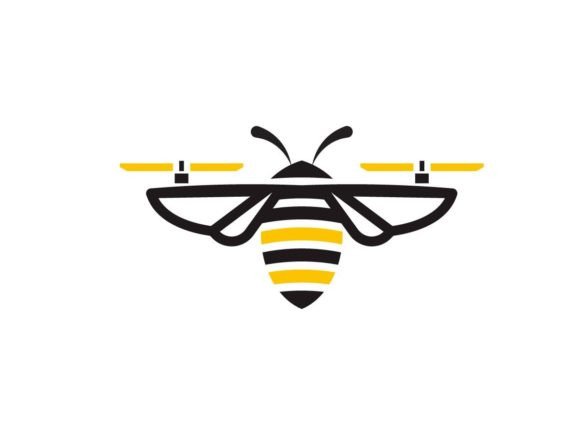
Propeller Bee Logo Template
As a designer who’s stitched hundreds of logos onto everything from baby onesies to boutique aprons, I opened the Propeller Bee Logo Template expecting charm—and got clarity. This isn’t just another bee motif dressed up for Instagram. It’s a quiet, confident piece of visual shorthand: clean lines, balanced negative space, and that subtle propeller twist in the wings that hints at motion, curiosity, and craft—without shouting.
I tested it first on a natural linen tea towel—medium-weight, slightly textured, the kind customers love for kitchen gifts. Hooped with medium tear-away stabilizer and stitched in soft matte cotton thread, the Propeller Bee Logo Template held its shape beautifully. No puckering. No lost detail in the wing contours. The minimalist style translated directly into embroidery-friendly geometry: no micro-details, no fragile serifs, no overlapping vector layers that confuse stitch engines. Just one cohesive silhouette with intentional breathing room—exactly what makes a logo work *in thread*, not just on screen.
Where This Bee Truly Belongs
The Propeller Bee Logo Template shines brightest where personality meets practicality. Think small-batch apparel: a unisex crewneck sweatshirt for a local honey shop, a set of embroidered cotton napkins for a wedding favor, or a series of organic-cotton baby bibs for an Etsy seller focused on nature-inspired nursery goods. Its scale is inherently versatile—it reads clearly at 2.5 inches wide (ideal for left-chest placement) but also holds integrity when resized down to 1.75 inches for a cap front or patch backing.
It’s especially strong for handmade product branding that values warmth over polish. Unlike hyper-detailed bees with intricate antennae or floral wreaths, this design avoids visual clutter—so it doesn’t compete with fabric texture, garment seams, or other embellishments. On a heavyweight canvas tote? Crisp and grounded. On a lightweight chambray shirt? Light enough to feel like part of the fabric, not pasted on. And yes—it works for holiday embroidery too: swap thread colors to forest green and cream for a rustic Christmas market stall, or soft gold on navy for a New Year’s artisan gift set.
What to Watch For—Real Embroidery Notes
Even clean designs need thoughtful execution. Here’s what I checked before committing to client work:
- Hoop size & density: The layout fits comfortably in a 4×4 hoop, but if you’re stitching on curved surfaces (like structured caps), confirm your machine can handle the outer arc without distortion—especially around the rounded abdomen and wingtips.
- Fabric texture matters: On nubby bouclé or thick terry cloth, the fine wing definition may soften slightly. That’s not a flaw—it’s physics. Test on scrap first, and consider light topping stabilizer if needed.
- Dark fabrics demand contrast: The design’s open structure means thread color choice is critical. A charcoal grey thread on black fabric will disappear; go bold—cream, mustard, or even deep teal—to preserve legibility.
- No tiny lettering or fine gradients: Good. There’s no text built in, which gives you full control over font pairing and sizing—essential for custom apparel or boutique branding where tone must match voice.
- Wash durability: Because it relies mostly on satin and fill stitches—not dense running-stitch outlines—the finished product stays soft after repeated laundering. Perfect for baby embroidery or kitchen towels customers actually use.
How It Elevates Your Craft Business
For Etsy sellers and small shop owners, the Propeller Bee Logo Template isn’t just a graphic—it’s a trust signal. Its minimalist confidence tells customers: *This is made with intention.* When stitched cleanly on a linen pillow cover or organic cotton apron, it reads as handmade—not mass-produced. That perception increases perceived value, supports premium pricing, and encourages repeat buyers who recognize your brand’s quiet consistency.
It also simplifies your workflow. Since it comes in scalable AI and EPS formats (plus SVG and JPG), you can adapt it across mediums: tweak spacing for a printable mockup, convert to vector for a laser-cut wood sign, or export clean PNGs for digital product previews—all without quality loss. That flexibility saves hours when building cohesive branding across embroidery files, social assets, and packaging.
A Few Practical Designer Reminders
Before stitching your first Propeller Bee Logo Template project:
- Always run a test on scrap fabric matching your final garment’s weight and stretch.
- Check stitch density in your embroidery software—especially near the wingtips—to avoid thread buildup or skipped stitches.
- Review licensing terms carefully. While the file includes scalable vector formats ideal for commercial embroidery, confirm whether resale of finished items or digital embroidery files is permitted under the original license.
- Try black-and-white mockups. Does the shape hold up when stripped of color? With this design, it does—proof of strong silhouette design.
- Pair it thoughtfully: it complements handwritten tags, kraft paper labels, and earthy packaging—but clashes with ultra-glossy or tech-forward aesthetics.
In short, the Propeller Bee Logo Template earns its place in my working library because it respects both the craft and the customer. It doesn’t try to be everything—it’s a focused, adaptable, quietly joyful piece of design that translates reliably from screen to stitch to shelf. Whether you’re embroidering a single personalized gift or scaling production for a craft fair season, it’s the kind of logos asset that makes your work look more considered, more professional, and more human—without extra effort.