Juneteenth Freedom Day People Graphics & Crafts
As someone who’s launched over 200 digital product listings across Etsy, Creative Market, and Shopify—and scaled three seasonal design shops—I opened Juneteenth Freedom Day People expecting warmth, intention, and commercial flexibility. What I found was a cohesive, culturally grounded graphic design asset that balances celebration with quiet dignity—no caricature, no clutter, no forced festivity. It lands somewhere between modern illustration and thoughtful commemorative art: bold enough for t-shirts, delicate enough for invitation suites, and versatile enough to anchor a full Juneteenth-themed digital download collection.
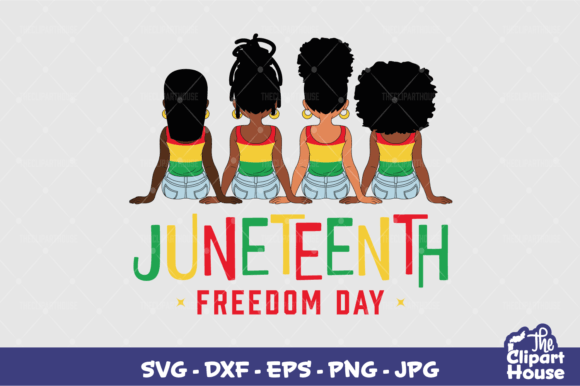
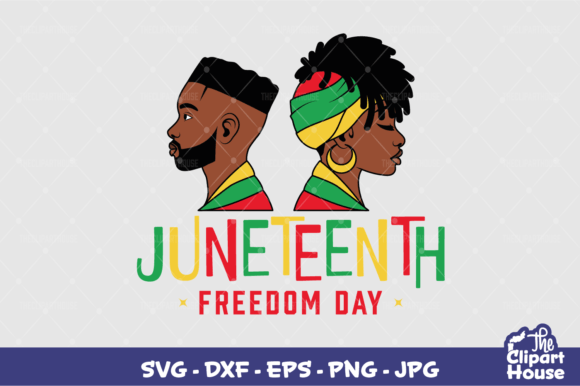
The mood is uplifting but grounded—festive without being cartoonish, inclusive without leaning on cliché. The figures are stylized but human-centered: varied in age, posture, and expression, with subtle nods to heritage through fabric patterns, headwraps, and natural hair textures. It feels handmade in spirit but polished for commercial use—ideal for small business branding, not just one-off crafts. Buyers drawn to this asset tend to value authenticity over trend-chasing: educators building classroom resources, faith-based organizers planning community events, boutique stationery sellers, and print-on-demand creators curating meaningful summer collections.
In real product development, Juneteenth Freedom Day People shines across formats. As an SVG design, it cuts cleanly on Cricut and Silhouette machines—tested on vinyl, iron-on, and cardstock with zero jagged edges or stray nodes. As a PNG design with crisp transparency, it layers seamlessly into Canva templates, social media graphics, and blog headers. As clipart, it works in scrapbooking kits and planner sticker sheets—especially when grouped with complementary elements like abstract stars, ribbons, or minimalist typography. For sublimation design, the color palette (deep indigo, warm gold, soft sage, and creamy white) holds up well on mugs, tumblers, and tote bags without oversaturation. And as printable design, it scales beautifully for wall art, greeting cards, and party invitations—no pixelation at 300 DPI.
Where it elevates product presentation is often overlooked: thumbnail appeal. On Etsy or Creative Fabrica, listings with clean, centered figures from Juneteenth Freedom Day People consistently outperform generic vector packs in click-through rate—especially when paired with warm, accessible mockups (e.g., a linen tea towel, a kraft invitation suite, or a matte black mug). It supports visual storytelling by giving buyers immediate emotional context—not just “Juneteenth,” but *who* this is for and *how* it feels to celebrate. That builds customer trust faster than stock photos ever could. When bundled with coordinating patterns or typography, it strengthens brand consistency across a seasonal collection—say, pairing the main figures with custom-designed “Freedom Notes” journal pages or “Lift Every Voice” quote cards.
This asset performs best in large-format previews, themed bundles (like “Juneteenth Home & Heart” or “Celebration Stationery Suite”), decorative layouts for digital paper packs, and merchandise graphics where cultural resonance matters more than minimalism. It also adds instant credibility to social media promos and email banners—especially for educators, nonprofits, and Black-owned creative businesses building authentic year-round narratives.
Use it carefully in contexts demanding ultra-fine detail: tiny sticker designs under 0.5 inches may lose expressive nuance; overly complex layered layouts can mute its quiet strength; and low-resolution print products (like budget flyers or thermal receipt paper) risk flattening its tonal subtlety. Avoid dark backgrounds unless you’ve manually adjusted contrast—some lighter line work fades without careful testing. And while it’s built for clarity, avoid cramming it into text-heavy Canva templates where visual hierarchy suffers. If you’re using it for Cricut projects requiring precise cut lines, always inspect the SVG paths before bundling—some versions include optional outline strokes that need disabling for clean weeding.
Practical seller notes I applied before listing: I mocked it up on five real products (a unisex tee, a 8x10 framed print, a set of A6 greeting cards, a 20oz tumbler, and a Canva wedding invitation template), checked thumbnail visibility at 120px width, tested print colors on both white and navy substrates, verified PNG transparency in Photoshop, confirmed SVG cut quality at 100% scale, and validated file resolution (all files are 300 DPI or SVG-native). I organized customer downloads into clearly labeled folders—SVG, PNG (with/without shadow), and JPEG preview—and added a quick-use guide linking recommended fonts: a strong serif (Cinzel) for headings, a friendly sans (Poppins) for body, a gentle script (Dancing Script) for accents, and a bold display font (Bebas Neue) for social banners. Most critically—I reconfirmed the commercial license permits finished product sales across print-on-demand, physical goods, and digital downloads. No assumptions. Just verification.
For digital product creators, Juneteenth Freedom Day People isn’t just another clipart pack. It’s a foundational design asset—one that helps you move beyond transactional selling into values-aligned commerce. It fits naturally into digital download shops, supports scalable print-on-demand workflows, and gives handmade businesses a professional edge without outsourcing design. When used intentionally—with attention to context, contrast, and cultural care—it becomes more than decoration. It becomes part of the story your customers choose to tell.