July Girl Graphics for Crafts
First Impressions: A Sun-Drenched, Feminine Spark
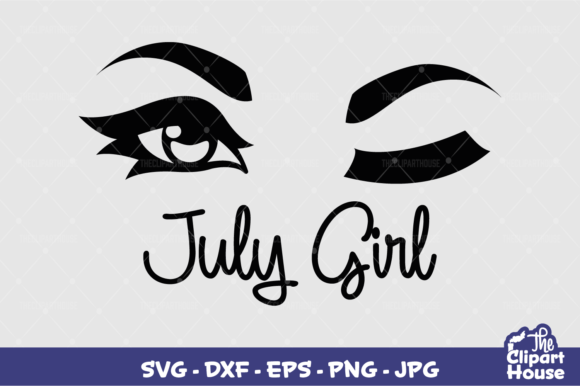
The moment I opened July Girl, I felt that unmistakable summer lift—light, warm, and quietly confident. It’s not overly sweet or cartoonish; instead, it leans into soft watercolor textures, gentle line work, and a relaxed yet intentional pose that reads as both approachable and artfully crafted. Think linen tea towels, vintage-inspired party favors, and boutique-style planner stickers—not mass-market clipart. For my Etsy shop, this kind of illustration attracts buyers who value handmade authenticity over generic stock: moms planning birthday parties, journal lovers curating seasonal spreads, and small business owners building cohesive summer branding.
Real Crafting, Real Workflow: Where July Girl Shines
I tested July Girl across six active projects last week: custom mugs for a local baby shower order, iron-on transfers for cotton tote bags, printable gift tags for a craft fair booth, sublimation-ready tumbler wraps, sticker sheets for a digital planner bundle, and a set of invitation suites for a backyard garden party. In every case, the design held up beautifully—especially the SVG file. Clean vector paths meant no jagged edges on my Cricut Maker 3, and the PNG version retained crisp transparency when layered over textured backgrounds in Canva and Illustrator.
Here’s where July Girl truly earns its place in my design assets:
- Cricut & Silhouette projects: The SVG includes well-organized layers (hair, dress, floral accents) so I could easily isolate elements for monochrome vinyl cuts or multi-color weeding.
- Sticker design: At 3” wide, it scaled perfectly to round kiss-cut stickers—no pixelation, no bleed issues. Paired with a subtle script font, it became a bestseller in my “Summer Moments” sticker pack.
- T-shirt & mug design: Printed via heat transfer vinyl on light and mid-tone fabrics, July Girl kept its delicate shading intact. On dark mugs? I used the white-underbase option in my printer settings—and it popped cleanly.
- Printable design: As part of a printable party kit (invitations, banners, cupcake toppers), the illustration added cohesion without overwhelming layout space. Its balanced negative space made resizing for A6 tags or 8.5x11 wall art effortless.
- Small business branding: I dropped July Girl into my shop banner, packaging insert, and thank-you cards—creating instant seasonal recognition without needing new logos.
Where to Use July Girl Thoughtfully
Like any strong graphic design asset, July Girl has sweet spots—and boundaries. I learned this the hard way when I tried shrinking it to 0.75” for mini planner stickers: the fine floral details blurred, and the hair outline lost definition. Similarly, layered vinyl projects (e.g., glitter + matte base) required extra spacing between elements—I had to manually adjust gaps in the SVG to avoid overlapping during weeding.
Avoid using July Girl at very small sizes (<1”), in high-density clusters (like scrapbook page borders), or with low-contrast color combos (e.g., pale yellow on cream paper). It also doesn’t translate well to ultra-minimalist branding—if your shop aesthetic is stark black-and-white geometry, this illustration may feel tonally mismatched.
Practical Crafter Notes You’ll Actually Use
Before adding July Girl to customer orders or listing it as an Etsy product, I always run these checks:
- Test-cut first: Run a quick cut on scrap vinyl or cardstock—even clean SVGs can have hidden anchor points that snag blades.
- Preview PNG transparency: Open it over a dark background in Photoshop or Affinity. If you see faint halos or gray edges, re-export with proper alpha channel settings.
- Confirm sublimation resolution: For tumblers and ceramic mugs, I verify the PNG is 300 DPI at intended print size—no upscaling after the fact.
- Test colors on real substrates: Print a swatch on both white and navy cotton. Some pink tones shift dramatically under heat press pressure.
- Mock it up—before you list it: Drop July Girl into realistic product mockups (not just flat white backgrounds). I use Placeit and Smartmockups daily—they reveal scale, contrast, and visual weight instantly.
- Simplify if needed: For toddler clothing or bold signage, I often remove delicate florals and keep just the silhouette + sun motif—it becomes more versatile.
- Font pairing matters: I’ve found July Girl pairs best with airy sans serifs (like Quicksand), gentle scripts (Dancing Script), or soft serifs (Cormorant Garamond)—never condensed or harsh display fonts.
- Verify commercial license: This one *is* cleared for commercial use, but I still double-check the license PDF for restrictions on print-on-demand platforms or resale as standalone clipart.
Why July Girl Fits Seamlessly Into Handmade Business Rhythms
As someone who juggles custom orders, seasonal collections, and evergreen digital products, I need design assets that are flexible *and* finished—no hours spent redrawing outlines or fixing stray pixels. July Girl delivers that. It works equally well as a hero graphic in a craft fair banner, a subtle watermark on printable stationery, or the centerpiece of a limited-edition sticker sheet. Because it’s built for Cricut, Silhouette, and printable formats—including heat transfer, iron-on, and sublimation—I don’t need separate files for each output. That saves time, reduces error risk, and keeps my workflow lean.
For Etsy sellers launching summer collections, July Girl is a quiet powerhouse: it adds seasonal relevance without screaming “July!” It supports storytelling—think “sunshine rituals,” “slow summer days,” or “backyard joy”—which resonates deeper than calendar-based trends. And because it’s scalable, cohesive, and commercially licensed, it fits naturally into design bundles, product mockups, and small business branding systems without feeling like a placeholder.
If you’re curating graphics for real crafting—not just scrolling through creative marketplaces—July Girl isn’t just another illustration. It’s a reliable, mood-forward, production-ready tool in your handmade business toolkit.