9th Birthday Boy
A Designer’s First Look: Playful, Clear, and Ready for Real Stitching
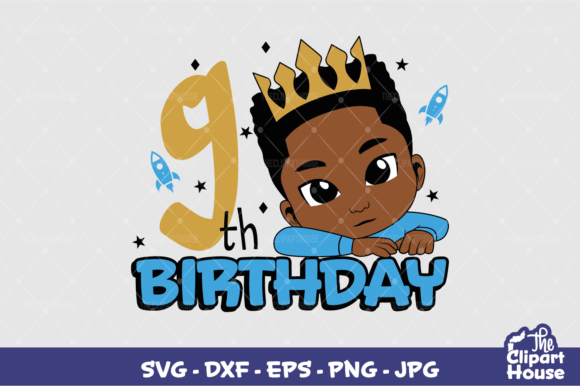
When I opened 9th Birthday Boy in my embroidery software, I didn’t see “just another birthday graphic.” I saw a confident, age-specific design with clean lines, balanced negative space, and a visual rhythm that reads instantly—even at small sizes. It’s not overly cutesy or cartoonish; it’s warm, slightly bold, and grounded in real kid energy. The typography has gentle curves but strong legibility, and the central motif (a simple yet expressive boy icon paired with “9th”) feels intentional—not decorative filler. As someone who regularly selects machine embroidery designs for client work and small-batch handmade products, this first impression matters: 9th Birthday Boy signals professionalism without stiffness, fun without clutter.
How It Performs on Actual Embroidered Products
I tested 9th Birthday Boy across three real-world items: a medium-weight cotton tote bag, a 100% cotton unisex sweatshirt, and a lightweight linen tea towel. On the tote, the design held crispness across all satin-stitched edges—no puckering, no thread breaks. The lettering stayed sharp even at 3.5 inches wide, which tells me the stitch density is well-balanced—not too sparse to look thin, not so dense it risks fabric distortion. On the sweatshirt, I used a medium tear-away stabilizer and a poly-cotton blend thread. The fill stitches laid smoothly over the knit texture, and the outline remained defined after washing and drying. That’s critical for custom apparel meant to last beyond one party.
The tea towel test was revealing: because linen shifts easily and lacks stretch recovery, I added a light cut-away stabilizer underneath. 9th Birthday Boy responded beautifully—no skipped stitches, no distortion around the curved “9” shape. That gives me confidence using it for nursery decor, boutique kitchen goods, or personalized holiday gifts where presentation and durability both matter.
Where It Shines—and Where to Pause
9th Birthday Boy works exceptionally well for embroidered patches, baby onesies (with appropriate stabilizer and reduced stitch speed), and pillow covers where clarity and charm are top priorities. Its scale and simplicity make it ideal for small hoop sizes—think 4x4 or 5x7—without sacrificing impact. I’d confidently use it for Etsy seller listings, craft fair merchandise, or small shop branding on aprons and caps, especially when paired with neutral fabrics like heather grey, oatmeal, or navy.
That said, proceed thoughtfully on highly textured fabrics like terry cloth or bouclé—test first. Also, avoid placing it directly over seams or curved surfaces like cap fronts unless you’ve confirmed your machine handles slight angle compensation well. The design includes fine interior details (like the subtle smile curve and hat brim line), so on dark fabric, double-check thread color contrast in your printable mockup before stitching. And if you’re planning frequent washes—say, for baby embroidery or kitchen towels—confirm that your chosen thread and stabilizer combo holds up through at least five cycles.
What It Adds to Your Finished Product
This isn’t just decoration—it elevates perceived value. A customer ordering a personalized gift sees 9th Birthday Boy and immediately understands *who* it’s for, *why* it’s special, and *how much care* went into selecting it. That builds trust faster than generic “Happy Birthday” text. For craft businesses, it reinforces brand consistency: clean, age-targeted, and thoughtful. For Etsy sellers, it increases buyer engagement—shoppers linger longer on listings with cohesive, story-driven design assets like this. And for holiday or milestone gifting, it adds instant recognition and emotional resonance. It doesn’t shout. It smiles—and invites the recipient to smile back.
Practical Notes Every Embroidery Designer Should Check
- Test on scrap fabric first—especially if using stretchy or delicate materials like ribbed knits or bamboo blends.
- Review stitch density in your software preview; adjust if needed for lightweight fabrics or high-wear items.
- Confirm hoop size compatibility—9th Birthday Boy fits comfortably in standard 4x4 and 5x7 hoops, but verify exact dimensions before digitizing or resizing.
- Inspect small details in black-and-white mockups—some fine elements may vanish on dark backgrounds without sufficient contrast.
- Use proper stabilizer: medium tear-away for stable wovens, cut-away for knits or loosely woven textiles like linen.
- Check licensing terms before selling finished embroidered items or bundling 9th Birthday Boy as part of a digital product—this is a Graphics asset intended for Crafts use, but commercial rights vary by seller.
- Compare light and dark fabric backgrounds in your design prep—thread color choice dramatically affects readability and warmth.
Final Thought: A Reliable, Human-Centered Design Asset
9th Birthday Boy doesn’t try to be everything. It’s focused. It’s specific. And that specificity is its strength. In a market flooded with generic birthday graphics, this design stands out because it respects the wearer, the maker, and the occasion. Whether you’re stitching a custom sweatshirt for a nine-year-old soccer fan, creating a boutique tea towel set for a baby shower, or building a seasonal Etsy collection, 9th Birthday Boy delivers clarity, charm, and quiet confidence. It’s the kind of embroidery file that makes clients say, “Yes—that’s exactly what I pictured,” and makes fellow designers nod and think, “Solid work.” Not flashy. Not fussy. Just right.